
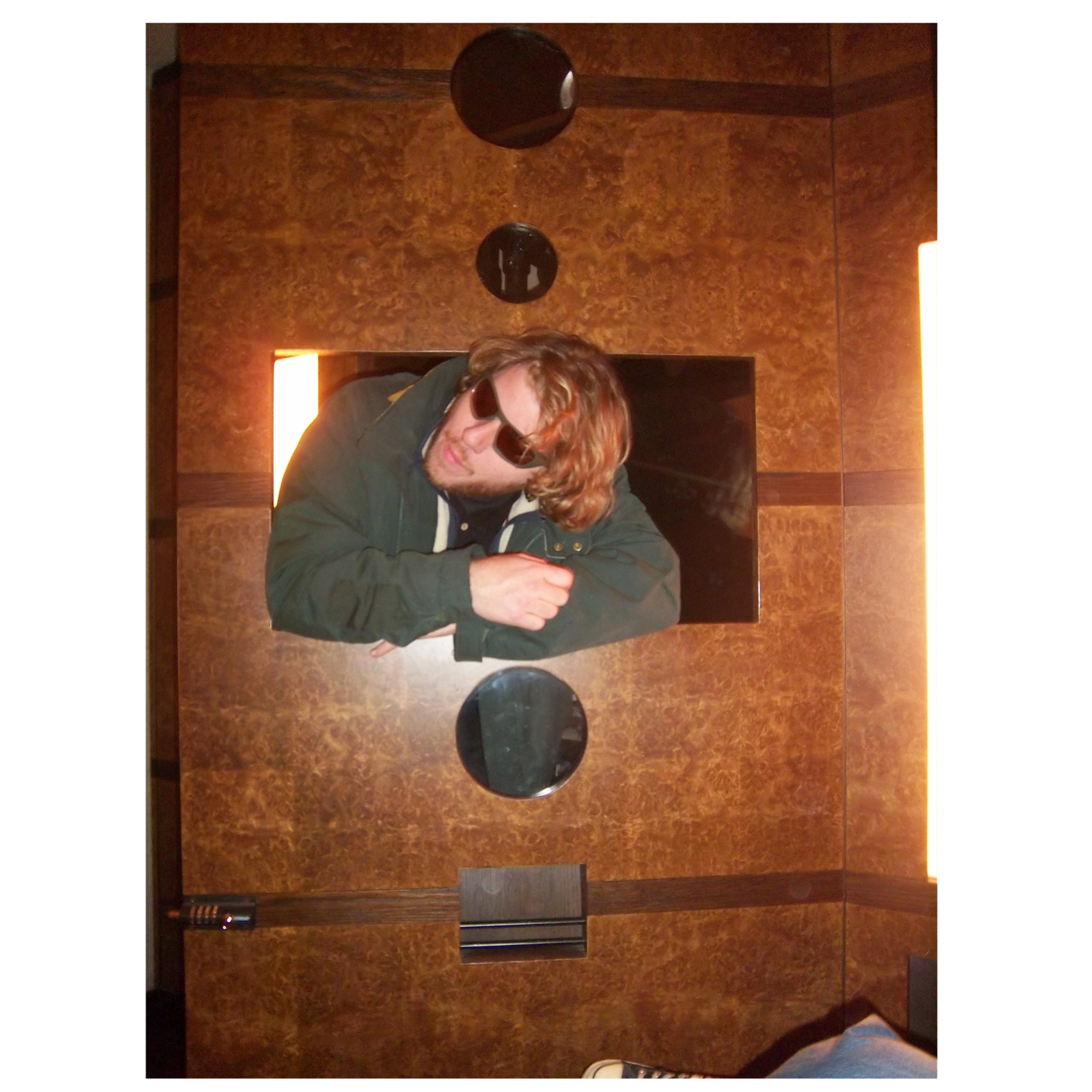
Ernest Bisgrove, Soho House, Rome.
Ernest Bisgrove belongs to a generation of Italians often described as cervelli in fuga – literally, brains on the run. It became the shorthand for the young professionals, creatives and graduates who left the country during the years of the eurocrisis, when Italy offered too little work, too little mobility, and too few reasons to stay. For many, departure was simply what you did.
Bisgrove left Rome for Milan, then London, then Barcelona. He built experience elsewhere, as many of our generation did. Unlike many, he came back.
Returning changed how he saw the city. What had once seemed ordinary like the newspaper kiosk, the corner bar, familiar faces on familiar streets, the loose social infrastructure of Roman neighbourhoods, now appeared as something both valuable and quietly disappearing. Out of that second look came c+e hub, the platform he co-founded in 2025 with Carol Ciccarelli, operating between Rome and New York, to ask a question that sounds simple and turns out not to be: how do cities rebuild genuine human connection from the ground up? The central idea, as Bisgrove puts it, is to rebuild the village.
– By that I don’t mean the form of a village. I mean its function. A network of repeated interactions, a condition where people recognise each other, where places have continuity, where relationships can grow over time.
Most people living in cities have lost that. They share postcodes with strangers, walk past the same faces for years without ever learning them. We want to rebuild that sense of recognition, inside contemporary, complex, diverse urban neighbourhoods, he says. Most urban projects, Bisgrove argues, begin somewhere other than with people. They begin with strategy, design, or policy. c+e hub tries to do the opposite. Starting with places and the everyday interactions that already happen in them, then ask whether those interactions can be made more visible, more durable, more connected. One point of entry has been the edicola, the traditional Roman news kiosk, a structure so common it has become almost invisible. As newspaper circulation collapses, many edicole have closed or sit half-abandoned. c+e hub has been exploring what the form could hold if its content changed.
– An edicola is already a node. It sits between information, routine and passing encounters. What we're asking is: what fills that role now? The newspapers may be going, but the spatial logic remains. A small, open-fronted structure embedded in daily life, in exactly the right place. We want to move from circulation to recognition. To find and tell better stories.
The language is modest, deliberately so. Bisgrove is sceptical of urban projects that arrive with answers before they have understood the place.
When he talks about homogenisation – the spread of the same brands, aesthetics and formats across cities – he doesn't argue for resistance so much as for attention.
– You can't fight globalisation. We work at the level of use. Globalisation creates similar-looking spaces, but what makes a place is who uses it and how. The same street, the same facade, the same coffee chain on the corner – and yet two neighbourhoods can feel completely different. That difference lives in behaviour, in routine, in the small rituals people build around the places they return to.
He cites the sociologist Roland Robertson's term glocalisation, the idea that global forces are always filtered through local meaning, and suggests that this filtering is precisely where c+e hub tries to work. This shapes how Bisgrove thinks about the role organisations like his should play in the larger processes of urban regeneration and placemaking, fields that have accumulated considerable vocabulary and rather less accountability.
– Too often regeneration is top-down. Cultural intermediaries can make it participatory and grounded by activating them in real life. We look for the people who are already holding a place together and ask: how do we make their work visible, supported, celebrated? Placemaking done well is not the creation of new meaning. It is the amplification of meaning that already exists but is not being seen. The distinction matters. A city that feels alive is not a city that has been given new things, it is a city whose existing relationships have been recognised and given room to continue.
On his own rough diagnostic: if people know each other, return to the same places, stay without a specific purpose, the neighbourhood is being lived in. If they pass through, photograph and move on, it is being consumed. The difference is repetition As for digital infrastructure, the platforms and tools that much of the conversation around smart cities and urban innovation has centred on, Bisgrove is measured rather than dismissive.
– Physical always comes first. Cities are physical systems. Relationships happen in space. Digital for us is a layer that documents, connects and scales. But the core work always happens in a place, with people, around something physical.
The long-term shape he imagines for c+e hub is a network of neighbourhood formats, connected by a platform, with a method others can adopt and adapt. But he is careful not to let the image of the future crowd out the work of the present.
When asked about his dream project, he pauses.
– There are many. And they are all vague. A neighbourhood festival where the festival where the whole community builds and celebrates together. A foundation supporting local traditions through artists who live them. local traditions through artists who live them. Taking a place and giving it real care through art, through presence, through the people who need it. But dreams are vague. You start with one, and only by doing it do you shape it into something real.
He stops. Then: maybe I'm naive. But let's see where this takes us.
