
– In San Lorenzo, within half a square kilometre, you have more than 50 artists' studios, more than 20 exhibition venues and 10 bookshops, says Alessandro Calizza, an artist who has lived and worked in the neighbourhood for over a decade.
He has also been part of that evolution. In 2019, he founded Ombrelloni Art Space, an artist-run initiative housed in a former umbrella factory on Via dei Lucani. Today it hosts seven artists’ studios alongside exhibitions, residencies and public programming.
If Ombrelloni represents a newer generation of independent spaces, it also belongs to a longer San Lorenzo tradition: from the former factory buildings of Pastificio Cerere, which artists began occupying in the 1970s, to more recent projects such as Numero Cromatico, the neighbourhood has grown through studios, self-organised spaces and cultural initiatives rooted in the area itself. To track that development, Calizza also co-founded San Lorenzo Art District, or Sa.L.A.D., a platform dedicated to telling the stories of San Lorenzo's contemporary scene and, by extension, Rome's.
Krizia Galfo, one of the artists based at Ombrelloni, says she came to San Lorenzo partly by chance and partly by instinct.
– I had been spending time in the neighbour-hood since my first years in Rome, back in the days of Cinema Palazzo, she says, remembering the former cinema reclaimed by residents in 2011 to stop its conversion into a bingo hall. For nearly a decade, it became one of Rome’s most visible experiments in community-run culture, before the occupation ended with an eviction in 2020. Today it has reopened as Palazzo San Lorenzo, a privately managed cultural venue.
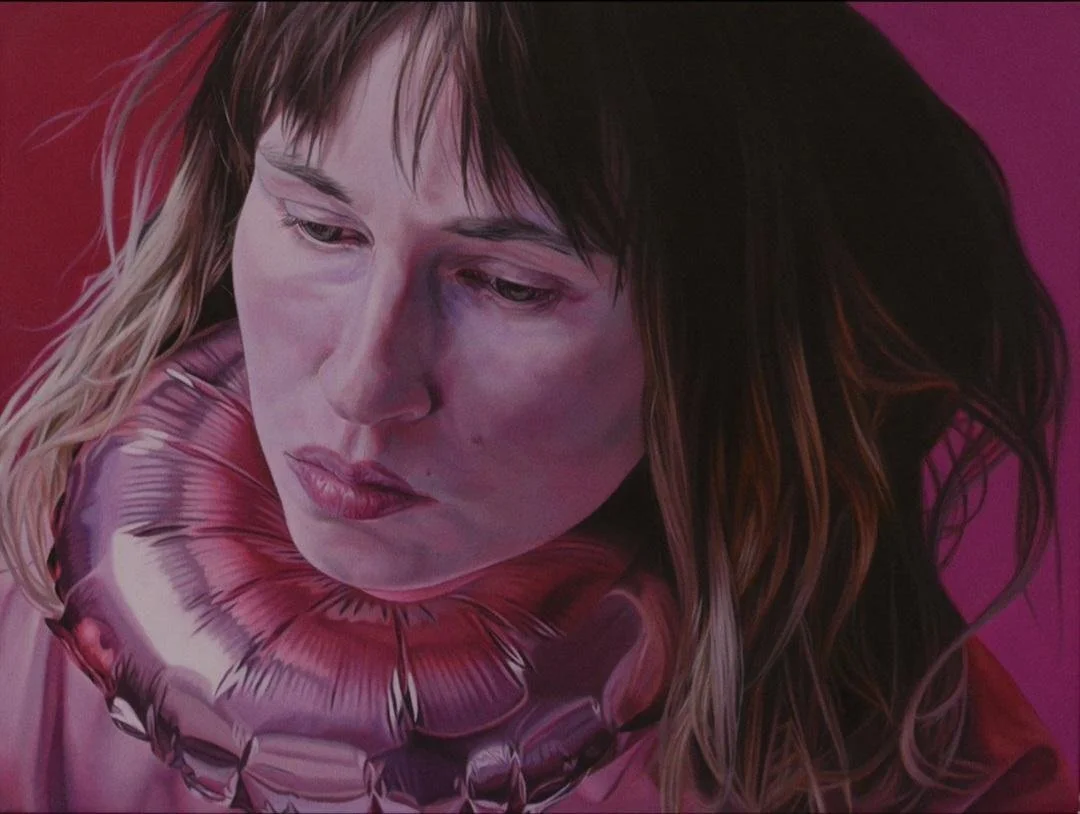
Krizia Galfo, The pool, Oil on linen, 30 x 40 cm, 2025
– What drew me back was the energy, especially in recent years. The studios, the galleries, the wider cultural production. Over the years there have been many collaborations, exchanges and conversations around each other's practices. We are living in times when individualism often prevails, and in some ways that is reflected in the art scene too. Fortunately, we are still able to build meaningful relationships that enrich us, not only professionally.
San Lorenzo, she says, still offers something rare in Rome: a place that feels accessible, close to the centre, and yet genuinely alive, despite the ongoing gentrification.
Part of that is also the atmosphere.
– There is Verano, the trattorias, the mix of artists, a glass of wine. Emotionally, it feels easy to have a studio here.
For decades the image of Rome as an art city was tied to the historic centre. It belonged to the Piazza di Spagna/Piazza del Popolo axis, where studios, galleries and institutions such as the Accademia di Belle Arti on Via di Ripetta defined the city's artistic geography. It extended to Via dei Condotti and the Antico Caffè Greco, where Giorgio De Chirico had his morning coffee every day, and to the quieter Piazza Farnese/Via di Monserrato orbit, where Cy Twombly made his Roman home and studio. Those days, of course, are long gone. Even Caffè Greco, one of the city's great cultural salons, spent its final years fighting for survival through petitions and public appeals before being shut after a long eviction battle.
Which makes what is happening in San Lorenzo all the more significant. At the end of March, the cultural festival Roma Diffusa – built around the motto Roma città odierna, in deliberate contrast to the city's more familiar Roma città eterna – turned its attention to the neighbourhood.
– San Lorenzo has the highest concentration of creative spaces in the city, and yet many people don't know this, Sara D'Agati, the festival's co-founder and Artistic Director, told Roman Radar ahead of the edition.
– What we wanted to do was make its creative ecosystem visible to a wider public, tell a stronger story about San Lorenzo, one that goes beyond the familiar narrative of nightlife and student neighbourhood, and that could travel beyond the district and beyond the city.
The effect was felt on the ground.
– Thanks to Roma Diffusa, all the galleries and studios of San Lorenzo met in one room. It was the first time something so collective had happened in the neighbourhood, says Calizza.
Now, he says, the next step is a larger shared festival of galleries and open studios, planned for the coming year. But the momentum comes with a cautionary note.
– I believe San Lorenzo is truly at a crossroads today. Culture and art are among its strongest resources, perhaps the main tools it has to defend the neighbourhood's identity against the gentrification dynamics reshaping Rome. But at the same time, they can also become a Trojan horse. It has happened in many cities, where cultural energy was used to trigger processes that ultimately stripped places of their character. The challenge now is to stay open to dialogue with the new forces arriving in San Lorenzo, without allowing them to redefine the neighbourhood.
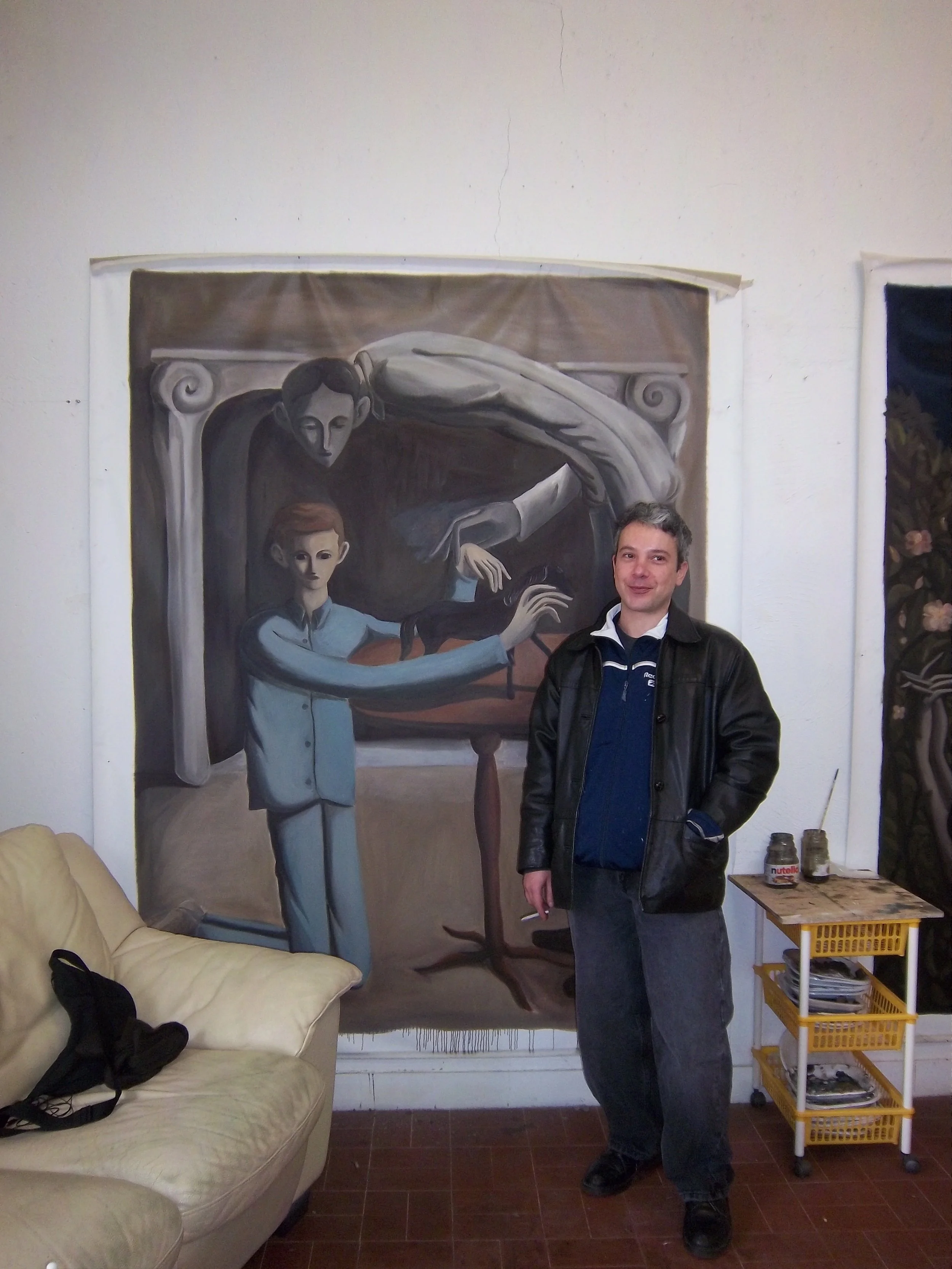
Dario Carratta in his studio at Ombrelloni
