The Aurelian Walls mark the southern edge. The cemetery of Verano, the largest in Rome, marks the east. Between them: one of the city's most stubbornly alive places. What follows is a selection of what’s worth coming back for, from somebody that lives in San Lorenzo. This is the anatomy of a neighbourhood in motion, from the first espresso in the morning to the last plastic cup of beer on the sidewalk.
The Morning Rites: Caffeine and Ink
The day in San Lorenzo begins with the screech of the tram and the heavy scent of roasted coffee. If you ask any local, they would say that Bar Marani is the spiritual heart of the neighbourhood. Under an ivy-covered trellis that filters the morning light, a seventy-year-old and a student who moved in last week typically share the same marble counter. Cash only, no pretension, and some of the most reliable pastries in the quartiere.
A block away, Giufà Libreria offers a different kind of morning fuel. It functions as a café, as an aperitivo bar, and as a library. It’s an intellectual anchor where graphic novels and independent magazines line the walls. You might stop here for a quick espresso but end up staying for three hours because you started reading a zine about 70s radicalism and the staff forgot to ask if you wanted another round.
And whenever Gente di San Lorenzo on Piazza Immacolata is too crowded, I usually turn to Bar 110 e Lode, named after the highest grade in the Italian university system and run by a sometimes sweet, sometimes slightly grumpy, elderly couple who work the espresso machine. Across Via Tiburtina, Caffè Quattrotempi sitson a quiet piazzetta where it’s easy to order three drinks after another without noticing. They also serve the district's best tavola calda for lunch.
If you have a sweet tooth, the choice is between the traditional and the specialized: Pasticceria Filiberto Paci serves classic Italian pastries that haven't changed in generations, boxed up da portare via, whereas Caffè Villa Mercede is the type of crowded, beautifully chaotic bar where the barista tries to learn your name. And if you’re looking for a glitch in the traditional matrix, Pasticceria Gluten Free on Via dei Campani is a good place to start.
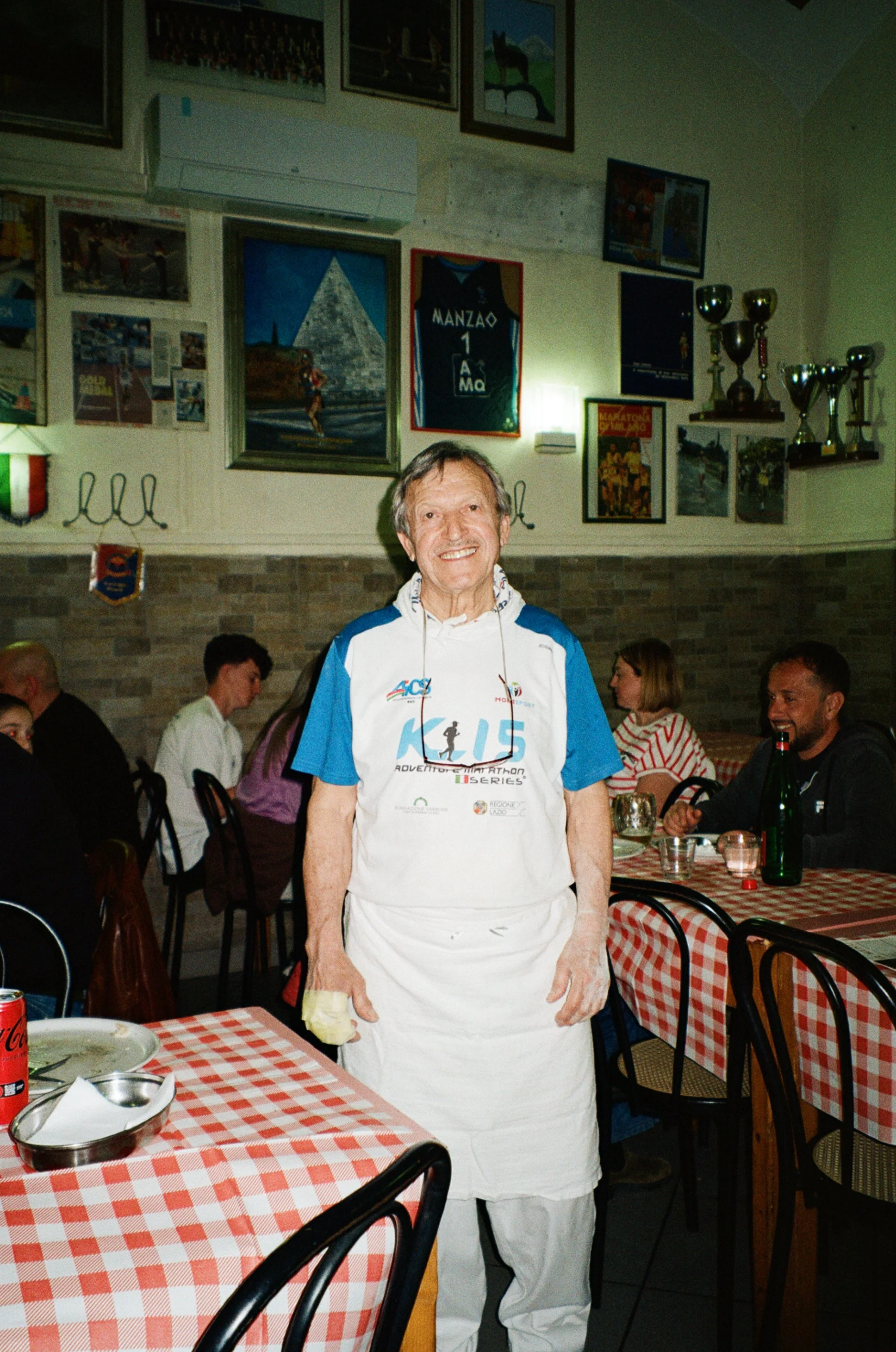
Photos by Teodora Ivkov, Mimmo Podista, 2026
The Midday Market and the Gelato
The Mercato di San Lorenzo took a brutal blow during the pandemic, the empty stalls are a quiet reminder of that, but the few vendors who remain are the neighbourhood’s real holdouts. Here, you can still find tomatoes from Sicily that smell like the sun, honey from Tuscany, and fresh seafood priced for people who actually live here, not just those passing through. That same honesty can be found at the fruit and vegetable stalls on Piazza dei Sanniti. It’s run by an Egyptian family synced to the seasons; they’re the first to let you know when the short, violent window for ripe figs has opened or when the pomegranates have finally hit their peak.
On Via dei Sabelli, there is no sign. You just have to know which door belongs to Enoteca Sabelli. Inside, you’ll find the owner Sergio who's usually the first to shout a greeting to anyone passing by on the sidewalk. Behind the counter, there are piles of cold cuts, regional cheeses, and shelves of wine. It’s the local go-to when you need a bottle and some real food for a night in.
If the Roman heat calls for something colder, the neighbourhood’s gelato scene is surprisingly competitive. Grangel and Zelato offer artisanal takes on the Roman classic, while SAID dal 1923 is a historic factory and a temple of chocolate.
The Afternoon Slump and the Hidden Ateliers
For evening activities - Cinema Tibur is a local treasure, a sanctuary for independent film that feels increasingly rare in a world of multiplexes. Behind the industrial facades, San Lorenzo has quietly become one of Rome's most serious addresses for contemporary art. The anchor is Pastificio Cerere – a pasta factory that went out of business in 1960 and sat empty until artists started arriving a decade later. The foundation that now runs the building organizes residencies, exhibitions and education programs, and the courtyard still houses working artists' studios alongside a photography school and an academy of fine arts.
The galleries that have since moved into the neighbourhood are many, but these are some favourites. Matèria has built its program around photography and research-driven practice – four exhibitions a year developed with artists. Monitor arrived more recently: Paola Capata, who runs the gallery, moved to San Lorenzo after the pandemic, drawn, she said, to a neighbourhood where things are still in formation. Porte Rosse opened in 2024, run by three women who have set up shop to push back against gentrification, by hosting events open to all.
The “Sere”: Public Living Rooms
If you want to get away from the student crowds swarming the main piazza in the evening, you need to move deeper into the side streets – to Artisan – a craft beer bar with industrial bones, garage doors that fold open onto the street, and twelve taps that rotate through Italian and European breweries. From there it's only a short walk to Bar dei Brutti, the neighbourhood's self-appointed anti-establishment.
The name is a joke at the expense of its neighbor, the altogether more respectable Bar dei Belli – and the joke has held for years. It's crowded most nights, the drinks are cheap, and nobody is performing anything for anyone.
A few streets over, Officine Beat has tiled floors, mismatched vintage furniture, book-lined walls and a menu that changes from time to time. Bar Celestino 1904 has been there, as the name confirms, since 1904 – which in San Lorenzo means it has outlasted two world wars, a bombing raid and several rounds of gentrification. You’ll find everybody crowding outside in the evenings.
The Communal Table: A Feast of Resistance
Dinner in San Lorenzo is rarely a formal affair. The gold standard remains at TramTram, where Rosanna Di Vittorio and her daughters Fabiola and Antonella have been running the same two-room trattoria since 1991. Don't come on Mondays. For something more contemporary, Mazzo is the place to go - they often host vinyl or DJ-sets on the weekends. Next door you’ll find Kitchen, run by Tania Fauci (see our interview on page 4), operates on a different logic entirely: community-driven, seasonally honest, and entirely her own.
If you want the OG San Lorenzo night, you go to Formula 1. Bright lights, fast service, thin pizza scorched by the wood fire, and a bill that won't break the bank. Across the street in spirit, Farinè takes the opposite approach: Carlo Teodori and Francesca Sarra ferment their dough for at least 48 hours using live sourdough and semi-wholegrain flour, bake it in an electric oven for consistency, and serve it on paper without plates or cutlery. It's a philosophical position disguised as a pizzeria. For a late sandwich and a craft beer, Vox Populi is the place to be – a gourmet paninoteca open until 2am on weekdays, with porchetta that locals will argue is the best in the city. And then there is Trattoria Da Silvan, open since 1988, which serves honest Roman classics in a room that hasn't changed much since and where, at some point during the evening, there is a reasonable chance someone will start an improvisational karaoke.
Plan accordingly.