
Paulina Tegner Galzignato, on the pace of life, the food and the culture of one of Italy's most beloved islands.
Paulina Tegner Galzignato is an Italian-Swedish travel lover born and raised in Rome, Italy.
Cannigione, August.
There is something special about the light here in the late afternoon. When the sun starts making its way down, and everything – the boats, the granite rocks, the low white houses – turns this incredible honey shade. I have gotten to know this particular colour well over the years, and you would think it would have lost its wow effect, but no.
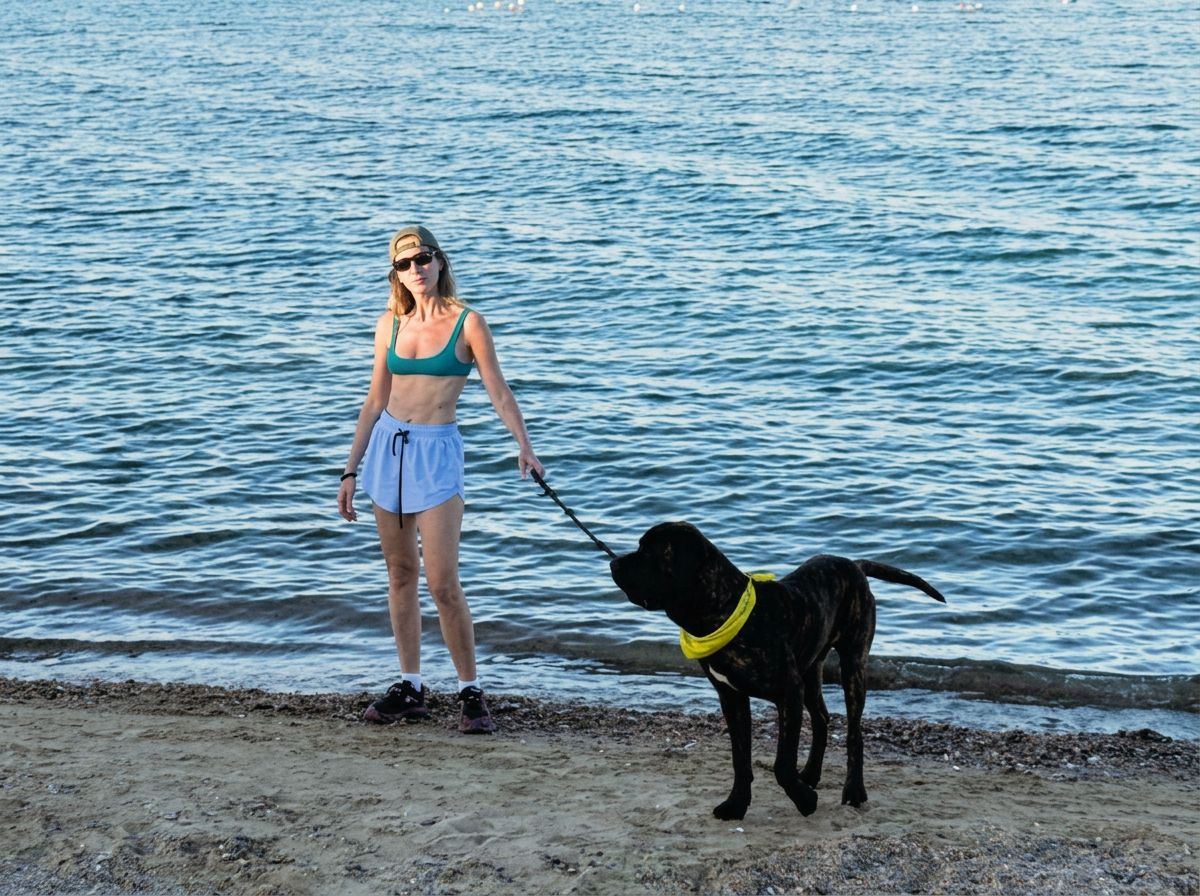
Being a Roman in Sardinia, one of my favourite things to do is go for a bike ride. In the city I am not much of a biker, but here it is an integral part of island life. In the early morning, before the heat sets in, I take my bicycle down along the seafront to the small walking street, in many ways the heart of the city, and onwards to the pineta, the pine forest running along the coast. There, the light instead turns green and gold and the air smells of salt. If you ask my dog, he would probably say it is heaven on earth. On my way back, I have breakfast in the piazzetta, the small square that sits perfectly in the shadow of the local church. The church is a low, solid building of Sardinian stone, a grey-gold granite, and very different from the monumental churches of Rome. It is more humble, just like life here.
Lunchtime belongs entirely to family, and particularly to Elvira. There is no version of this holiday that does not revolve around her kitchen. Some days she will serve pasta with clams and bottarga, a Sardinian delicacy. Bottarga, for you who are unfamiliar with it, is cured, pressed fish roe that is salted, pressed into a firm block, and air-dried. It has many uses, but one is to grate it over pasta, and I can highly recommend it! Other days we simply have tomato, basil and mozzarella, always with pane guttiau. To make guttiau, you take the thin, crispy carasau bread, a Sardinian classic, drizzle it with olive oil and salt, then put it back in the oven briefly so it crisps up again. The result is a thin, crackly, savoury flatbread. No matter the dish, there is always a glass of vermentino vino sfuso, wine sold on tap straight from a barrel, on the side. She gets it every Monday at the local market.
On the few occasions we go out for lunch, one of my favourite places is Bar di Porto Sole, out in Mucchi Bianchi. You eat beneath cedar trees, and even if Sardinia is known for crystal waters, here the beach is giving the sea a run for its money. It is a very Ibiza vibe, but the price still feels genuinely fair.
For dinner, there is Lu Beddu, an agriturismo with its own wine. My favourite is the Rosato, a light red/dark pink wine, named after the woman who owns the place. If you want, you can be served a set menu of local products. A little further along, past Arzachena, lies Agriturismo La Colti. No menu to choose from, just a fixed traditional Gallura, a historical region in the northeastern corner of Sardinia, tasting menu. Less than 40€, all homemade. A drive away is Zebè, but the incredible quality of the food here always makes the drive worth it. Closer to home, right on the seafront, there is the unpretentious Trattoria Baltolu da Ottavio, perfect for a romantic dinner, a night with friends, or a Saturday lunch with a view. I always order the same three things without fail: bottarga sliced thick over fennel, fregola, and seadas for dessert. Fregola is a small, toasted pasta, a bit like a nuttier cousin of couscous, made by rubbing semolina dough into little pellets and toasting them. Seadas is a fried pastry, filled with fresh, slightly tangy cheese (usually pecorino sardo, not fully aged, so it is still soft and a bit sour rather than sharp), drizzled with honey or sometimes sugar. Both a Sardinian classic and a staple at restaurants here.
When I am in a luxury mode, and want fish with a view, it is Boutique del Mare, right on the water, with beautifully fresh tartare.
Between meals, because here there is always, mercifully, time between meals, you explore the island, and this is nuraghi country. These short stone cones you see scattered across the countryside are actually the island’s oldest signature trait. They were built by the Nuragic civilisation from 1800 bc and for centuries to come, dry and without mortar, by stacking massive boulders on top of each other. There are still somewhere between seven and eight thousand of them across Sardinia.
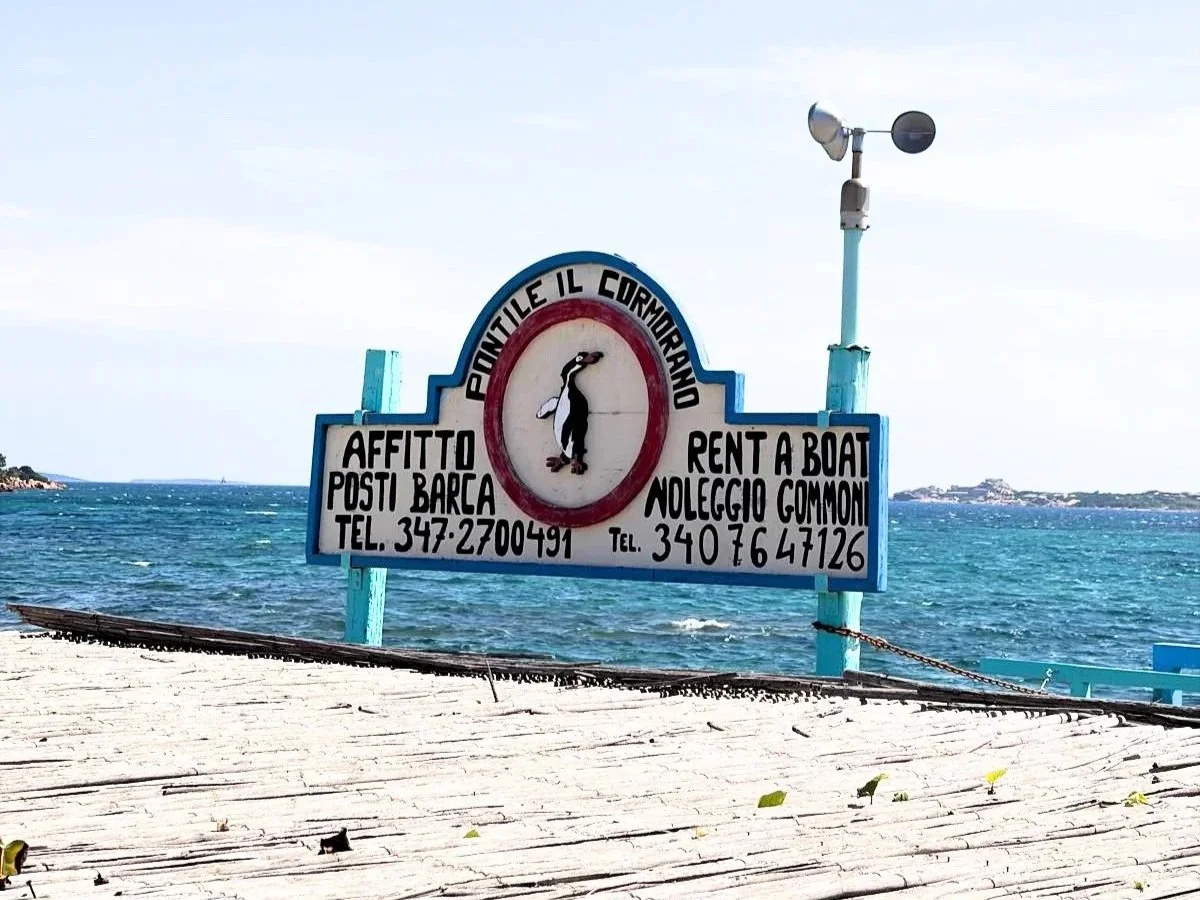
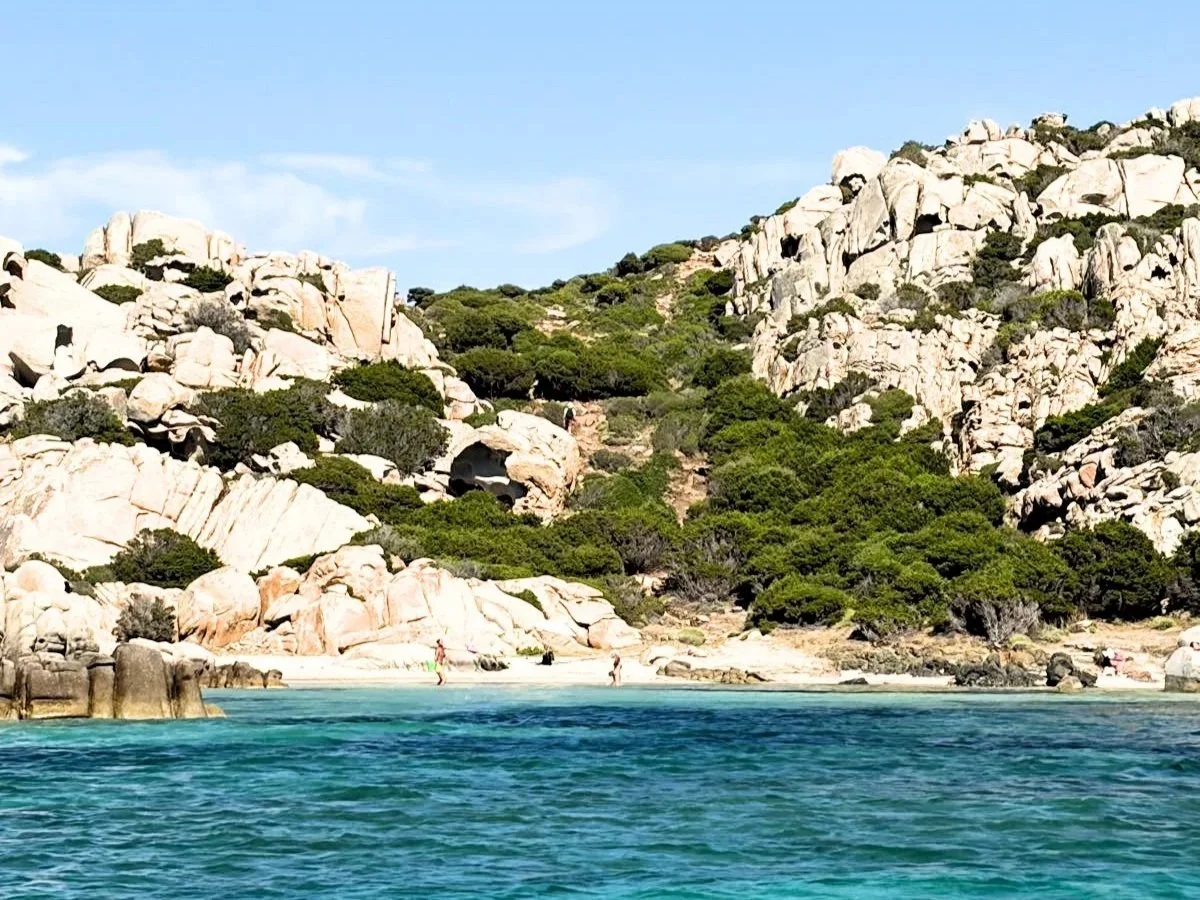
But everything I have told you so far is really just what happens in between. Because the real advantage of Sardinia, the thing that makes it different from everywhere else, is the sea. That impossible turquoise water, the coves you can only reach by swimming, the granite islands scattered offshore like something left behind by giants. So my real advice, if you want only one, is this: rent a gommone, a dinghy. Nothing else gets you to Mucchi Bianchi at eight in the morning, or lets you drop anchor in some cove nobody bothered to name.
Everything on this island is truly wonderful.
But the sea is why you came.
Paulina Tegner Galzignato
Paulina’s Sardinia picks
Breakfast
The Square at Piazza San Giovanni BattistaLunch/aperitif
Bar di Porto Sole (Mucchi Bianchi)
Via Mucchi Bianchi, Baja Sardinia
Agriturismi with wine/dinner
Lu Beddu
Via/Località Lu Beddu, 07021 Arzachena (OT)
Agriturismo La Colti
SP Arzachena-Cannigione, Località Lu Pireddu, 07020 Cannigione (OT)
Dinner
Trattoria Baltolu da Ottavio
Via Lungomare Andrea Doria, 75, 07021 Cannigione (Arzachena, OT)
Boutique del Mare
Spiaggia Barca Bruciata / Mannena, Strada Cannigione, 07021, Palau (SS)Zebè
Località Scupetu, 07030 Sant’Antonio di Gallura (OT)