
We ask for a table. The room is full.
Tania Fauci looks up, reaches for a notebook, writes down a name and says to come back in fifteen minutes. No phone number, no app, no hostess desk. Just paper, pen and a system that exists entirely in her head.
When we return, the room is still packed. Yet somehow there is space for all 12 of us.
Kitchen, in San Lorenzo, does not operate like a contemporary restaurant. It works like an extension of the neighbourhood outside. People entering, leaving, waiting, helping, talking across tables. The walls are layered with paper doilies covered in messages and drawings. The lamps are wrapped in lace. The chairs don’t match. Nothing appears arranged for effect, yet everything feels deliberate.
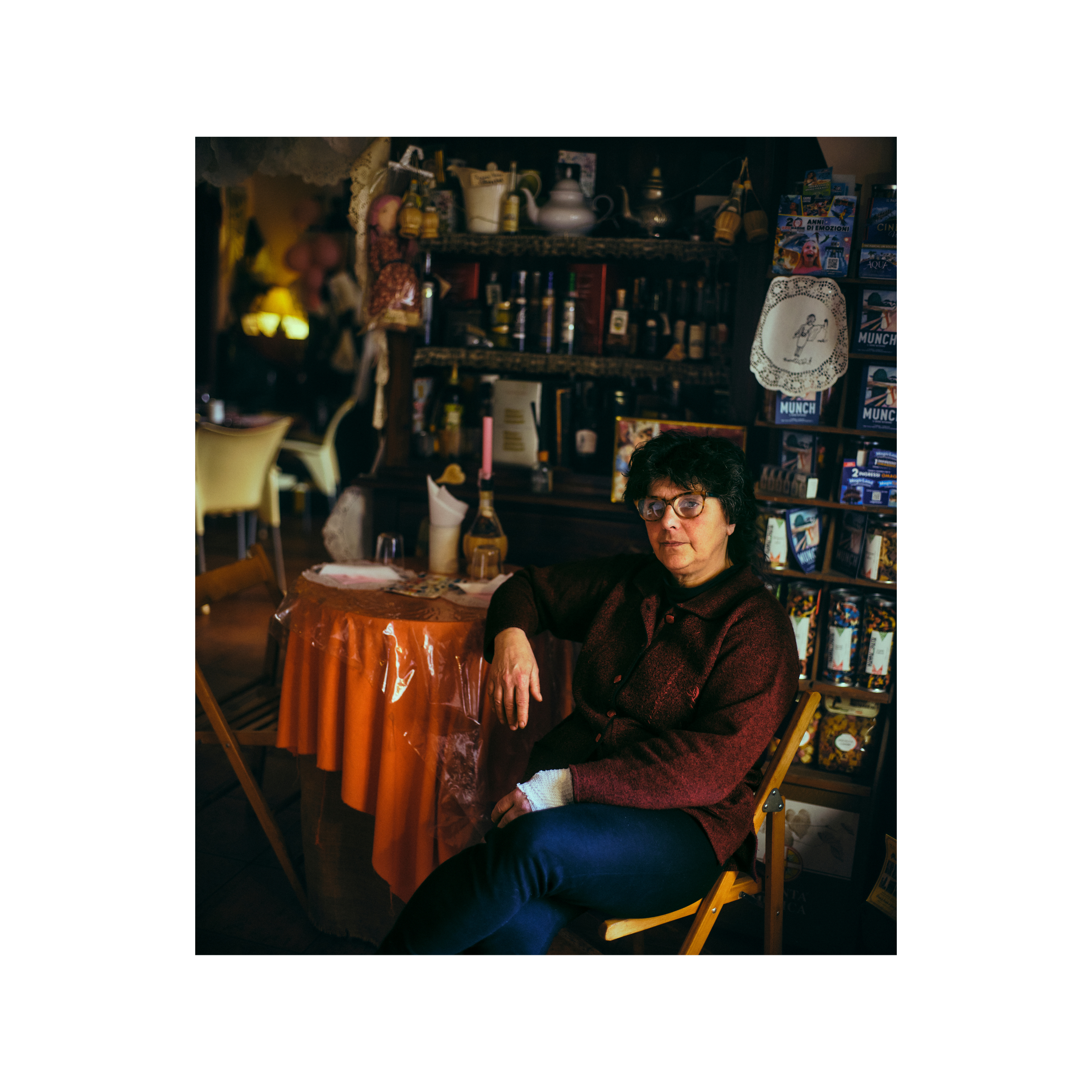
Photo by Federico Romano, Tania at Kitchen Alimentari, 2026
Fauci moves through the room as owner, cook and host. She speaks about supermarkets, rents, neighbourhoods, loyalty and the disappearance of small urban economies with the clarity of someone who has witnessed each phase of Rome’s transformation from behind a counter.
Kitchen Alimentari, takes its name from Banana Yoshimoto’s novel, Kitchen.
– I loved the image she portrayed in the book, women in front of the fridge, late at night, talking, eating whatever is there, not trying to do anything in particular. Just being somewhere. That was the feeling I wanted. A kitchen as a place to stay and be in, not only to cook. That was the starting point.
And before San Lorenzo?
– Before I had a shop near what is now Palazzo Merulana. I used to joke that I was “Panella for the poor.” Similar products, smaller place, lower prices. Then the rent doubled. At a certain point it doesn't matter how much you want something. You can love a place completely and still get pushed out of it.
Why did you choose to come to San Lorenzo after Via Merulana?
– Because it is my neighbourhood. I was born there, grew up there and I understand its rhythms. And also because it is a working-class neighbourhood.
How do you see it changing now?
– I’ve already seen this story once. First come the changes that seem practical. Then small economies begin to disappear. We didn’t need supermarkets. We had markets. We had Piazza Vittorio. You knew who sold what, who was reliable, who would keep something aside for you. Then habits changed. Families spent weekends in shopping centres. For a local shopkeeper, you watched that happen and you knew what would come next.
Which is?
– Empty shutters. No butcher, no bakery, no repair shop, no place where people know each other.
And yet places like yours still exist.
– Because they choose to exist. It is harder today to be an independent shopkeeper or restaurateur, but it is still possible.
There’s a strong sense here that this is more than a restaurant.
– If you work sulla strada [street level], you should think of yourself as a public service. Not only a business. When I was growing up, shops used to keep a notebook with debts, and write things like: “Signora Luisa will pay later.” Maybe she never paid, the point was that we trusted one another. When I had my shop on Via Merulana children came in after school for a sandwich. They didn’t need to come with exact change because I knew the parents and knew they would come in another day and pay what they owed. And the children were free to roam around because the parents knew they were safe in the ecosystem of the neighbourhood.
Where are those children today?
– They are all adults now. Some come to my restaurant. They bring friends, partners, stories. Time passes, but not everything has to disappear with it.
I noticed someone from the neighbourhood walking in and helping you for a moment.
– Yes. That happens. If I’m alone, someone may step in and help carry plates or clear a table. It’s natural to me.
To many people, that sounds almost utopian now.
– It shouldn’t be. It used to be normal.
The walls are covered in notes and drawings. How did that begin?
– People started leaving them. One by one. Then more. I kept some, threw some away. Now there are too many to count.
Some people might walk in and think it's too chaotic.
– They do. They look around and leave. Too messy, too much, too strange, I've heard it all. But this place was never meant for everyone.
Who is it for then?
– For people who understand that not everything valuable has to be fashionable.
Is that what Rome risks forgetting?
– Rome risks forgetting many things, but especially that a city works because of relationships, not only transactions.
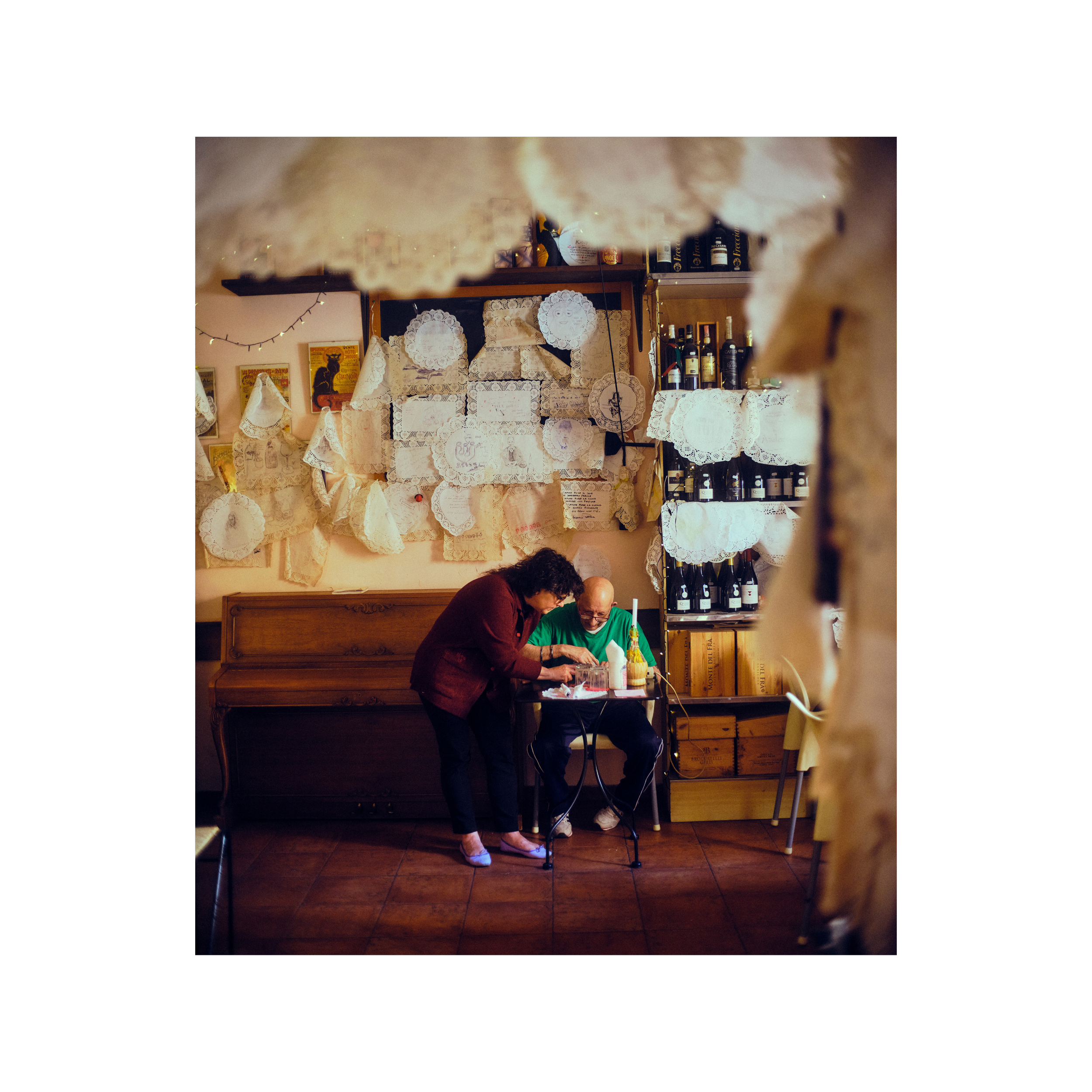
Photo by Federico Romano, Tania at Kitchen Alimentari, 2026
