
The answer to why every woman you know is buying a new planner this month. And yes, it has to do with the stars.

John Flamsteed, La Balance et Le Scorpion, 1776
The other day when I was on my way to a cartoleria to buy boxes and folders to organise my bookshelf, I ran into a friend.
I was mid-mission, heading there with a specific list of things to buy, and she was going home. When I explained why I looked like a woman with a plan, she started laughing, dug around in her tote bag and pulled out a brand-new planner that she had bought the week before. In her case also to get organised. She showed me the spread of her upcoming week, already filled with meetings, a haircut appointment and different blocks of a life being arranged.
We stood there laughing for a minute before saying goodbye and once inside the shop, I loaded up with a stapler, staples, paper clips and four different portadocumenti. One in deep red that closes with a snap button, another one structured like a standing filing box and two folders in pink and yellow.
In Swedish, there’s a term for this phenomenon. The way women specifically seem to enter a state of extreme organisational fever at the start of September. We call it tjejnyår, Girl New Year.
Usually, the eve of the Girl New Year falls on September 1st. It’s an unofficial holiday turned ceremony, and it is gaining more and more traction every year. Swedish women who celebrate it usually do so with friends, over a candlelit dinner, armed with an individual spreadsheet running six pages deep. Each one is dedicated to a different area in life which they want to set up goals and intentions for in the coming year. It includes everything from “Things i’d like to leave behind” or “Places I wanna hang out in” to more casually “On the topic of sex I’d like…” and “People or characters I’d like to be inspired by fashion-wise”.
There is even a viral PDF that goes around this time of year, thanks to the Swedish blogger Flora Wiström.
Swedish women might still celebrate the regular New Year’s Eve with fireworks and eating 12 grapes under a table, but their actual new beginning happens now in September. And it is an urge that goes deeper than falling victim to a marketing strategy.
This need to re-organise our lives in September is not a particularly new phenomenon. Long before planners, viral PDF:s and portadocumenti became a thing, entire civilisations oceans apart used to build their most important rituals of balance, renewal and reckoning around this exact month.
The scale in the sky
Around 2 000 BCE, the Babylonians used to look up at a patch of sky during this time of year and call it ZIB.BA.AN.NA, “the balance of heaven”. They thought that the star constellations reminded them of a scale, aligning day and night perfectly against each other.
The Greeks however, didn’t see a scale there at all. They saw claws and decided to categorise those stars into the neighbouring constellation, Scorpius, calling them Chelae, “the claws”.
Arab astronomers later inherited that Greek view and named the two brightest stars of the same constellation Zubenelgenubi and Zubeneschamali, Arabic for “southern claw” and “northern claw.”
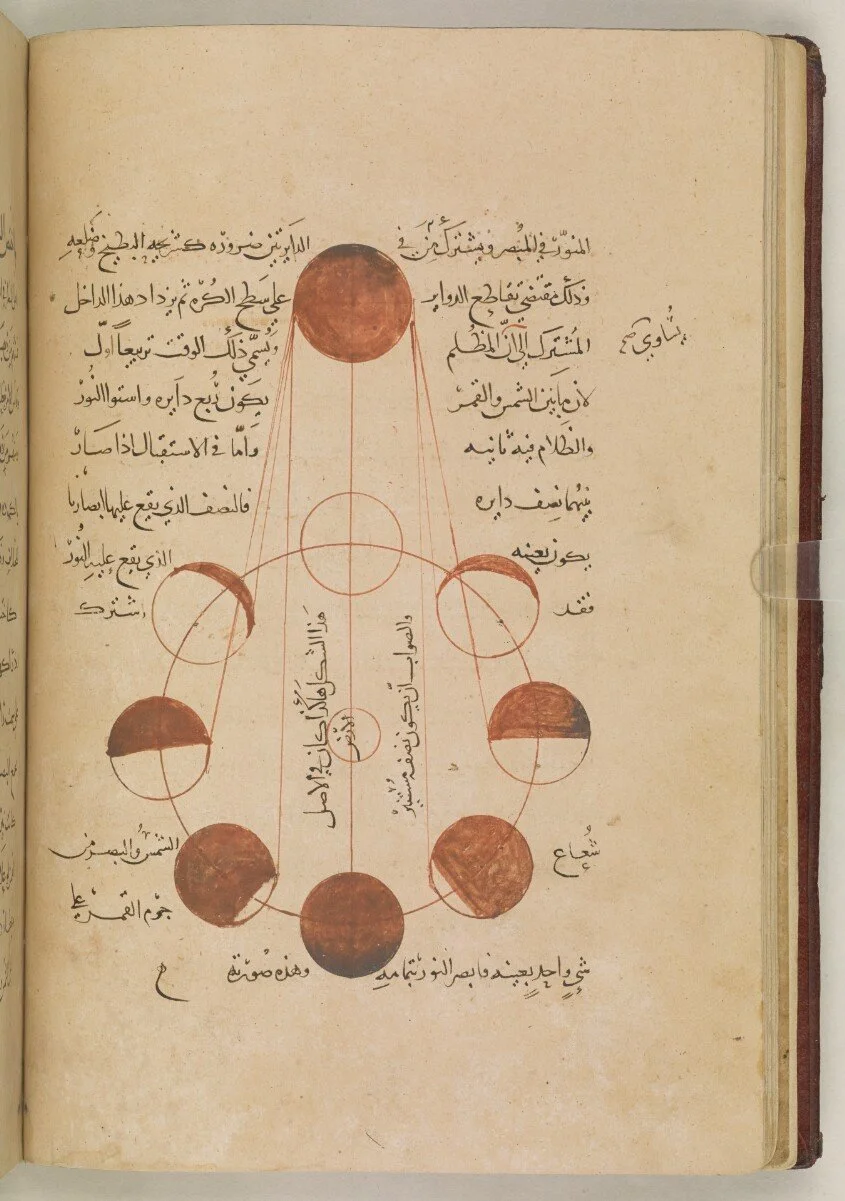
An ancient Arabic document from Kitāb al-tafhīm, “The book of explaining the principles of astrology” by Abū al-Rayḥān Muḥammad ibn Aḥmad al-Bīrūnī ca 973-1048.
It wasn’t until 100 BCE, when the Romans revived the older Babylonian idea of a scale and decided to pull those stars back from the scorpion’s grip. They were again re-established according to the Babylonian scale as their own constellation, Libra.
Today the month of the Libra carries the Babylonian idea of a scale and represents balance. But its two brightest stars, Zinebelgenubi and Zubeneschamali, still carry the Greek interpretation in their names.
And there is more. Modern astrology still runs on the memory of what the constellation used to look like over 2 000 years ago. Today, the start of the Libra is defined by the date of the autumn equinox, not the day when the actual constellation itself appears in the sky.
This is because precession has long since dragged the actual start of Libra out of alignment. Meaning, our ancestors built an entire symbolic language around a Roman reconstruction of a Babylonian observation which tells the story of a few weeks in September. And today it’s still the operating system under half the horoscopes you’ve ever read.
The bridge to the other shore
Halfway across the world, Japan found it’s own interpretation around the year 700. Higan, which literally translates to “the other shore” is a Buddhist observance held during both equinoxes. It lasts for seven days (with the equinox on day 4) and marks a period of spiritual reflection and an opportunity for families to visit and clean ancestral graves. The reasoning is almost unbearably poetic. When the sun rises and sets in a perfectly straight line, it is believed that the boundary between this world and the next is at its thinnest. Therefore, creating a direct bridge between the present where we stand, and higan, the far shore, nirvana.
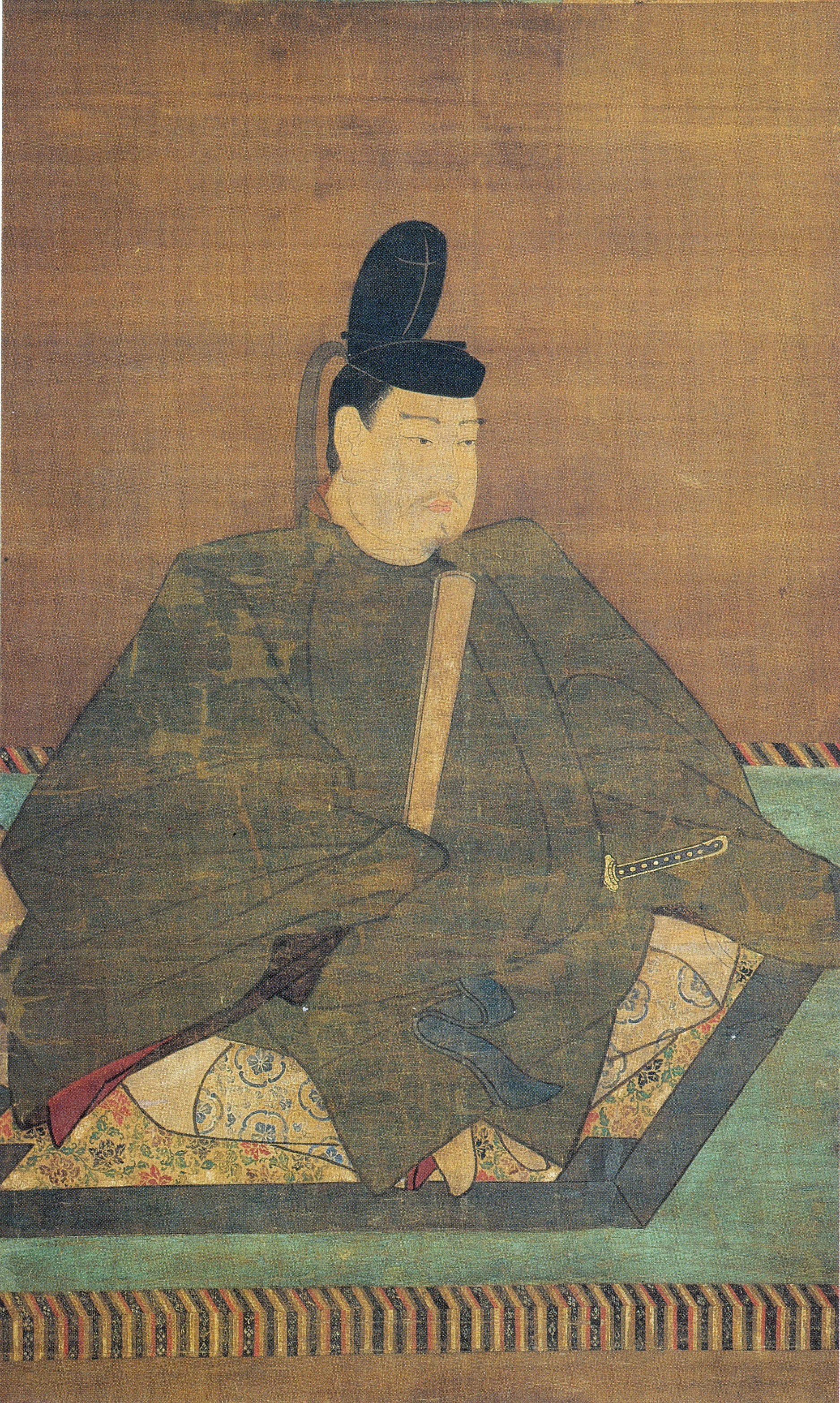
The Japanese Emperor Shomu, who introduced the observance of the ohigan holiday for both spring and autumnal equinox.
If we were to dig even deeper, there is also ancient Egypt, whose civil year, the Akhet season, historically aligned with the Nile’s flooding around late summer and early autumn. Their actual New Year’s Eve used to fall on the day of the autumn equinox.
Or the Aztecs in Mesoamerica, who used a broom as the symbol of this period. They used to celebrate a 20-day long month called Ochpaniztli, which translates to “sweeping” or “cleaning” in Classical Nahuatl language. This celebration lasted over the autumn equinox during which they cleared their roads and houses to mark the end of the harvest and the start of something new.
Or Celtic traditions which marked Mabon as a vital harvest turning point – which by the way still falls on the 22-23 september (you guessed it, the current date of the equinox).
What all of this historical evidence testifies to is the fact that we all share and have shared the same intuition. Something in the world is momentarily in balance during this time of year and that balance is not neutral and it is not something to ignore. It is a threshold, if you will. Or a door left open just long enough to walk through.
Which brings me back to the portadocumenti.
This is not an attempt to justify an unnecessary stationery habit, I promise, but the fact that we have a wave of women across the globe almost involuntarily starting to clear their desks, shelves and buying planners in a bizarre synchronised way, during the exact same week, around the same time of year has to mean something. They are setting up goals and booking hair appointments and reflecting on what’s to come - completely unrelated to each other.
Perhaps we are collectively responding to something that’s been known to humans for thousands of years, no matter the location where it happened or whether we call it a Libra-season, higan or a Girl New Year.
For a few million women (myself included), the celebration of the moment when light tips into dark is more than an ordinary Tuesday. For many of us, it means getting yourself a stapler, a new planner and four folders in different colors. It is having dinner with your girlfriends and deciding whether you will get a fringe this autumn or not. Perhaps because like in past civilisations, something in us is still aligning with a phenomenon much bigger than ourselves.
Or to put it simply - remembering when it is time to clear out the mess of the past to make room for something new.
Happy Girl New Year.